Honors Thesis 2026 - Natalie Hu

Beyond Text: LLM-Based Dimensional Emotion Evaluation in Multimodal Dialogue
Natalie Hu
Highest Honor in Computer Science
Abstract
Emotion recognition in conversation (ERC) has been widely studied, yet the application of Large Language Models (LLMs) to continuous dimensional emotion evaluation in multimodal dialogue remains largely unexplored. This thesis proposes a multimodal LLM-based framework that performs two independent tasks on the IEMOCAP dataset: discrete emotion recognition across six categories, and dimensional emotion evaluation along the Valence–Arousal–Dominance (VAD) continuum. Following the SpeechCueLLM approach, acoustic information is incorporated as natural language descriptions of pitch, volume, and speaking rate, enabling LLMs to access non-lexical cues without architectural modification. We evaluate five models spanning the LLaMA and GPT families under zero-shot prompting, few-shot prompting, and LoRA parameter-efficient fine-tuning. Results show that LoRA fine-tuned LLaMA models substantially outperform prompt-engineered GPT models on both tasks, which is somewhat counterintuitive given the larger scale of GPT models, and we attribute this performance gap to domain adaptation rather than model capacity. Our best model achieves a Valence Concordance Correlation Coefficient (CCC) of 0.7822, establishing a new state-of-the-art on IEMOCAP for this dimension. The error analysis reveals that GPT models have specifically high confusion rates for certain emotions, showing its lack of adaptation to this domain. Meanwhile, the performance asymmetry across VAD dimensions is explained by the annotator agreement on those three dimensions: the reliability hierarchy in IEMOCAP annotations is mirrored directly in the models' performance on VAD dimensions.
Department / School
Computer Science / Emory University
Degree / Year
BS / Spring 2026
Committee
Jinho D. Choi, Computer Science, Emory University (Chair)
Joyce Ho, Computer Science, Emory University
Phillip Wolff, Psychology, Emory University
Links
Anthology | Paper | Presentation
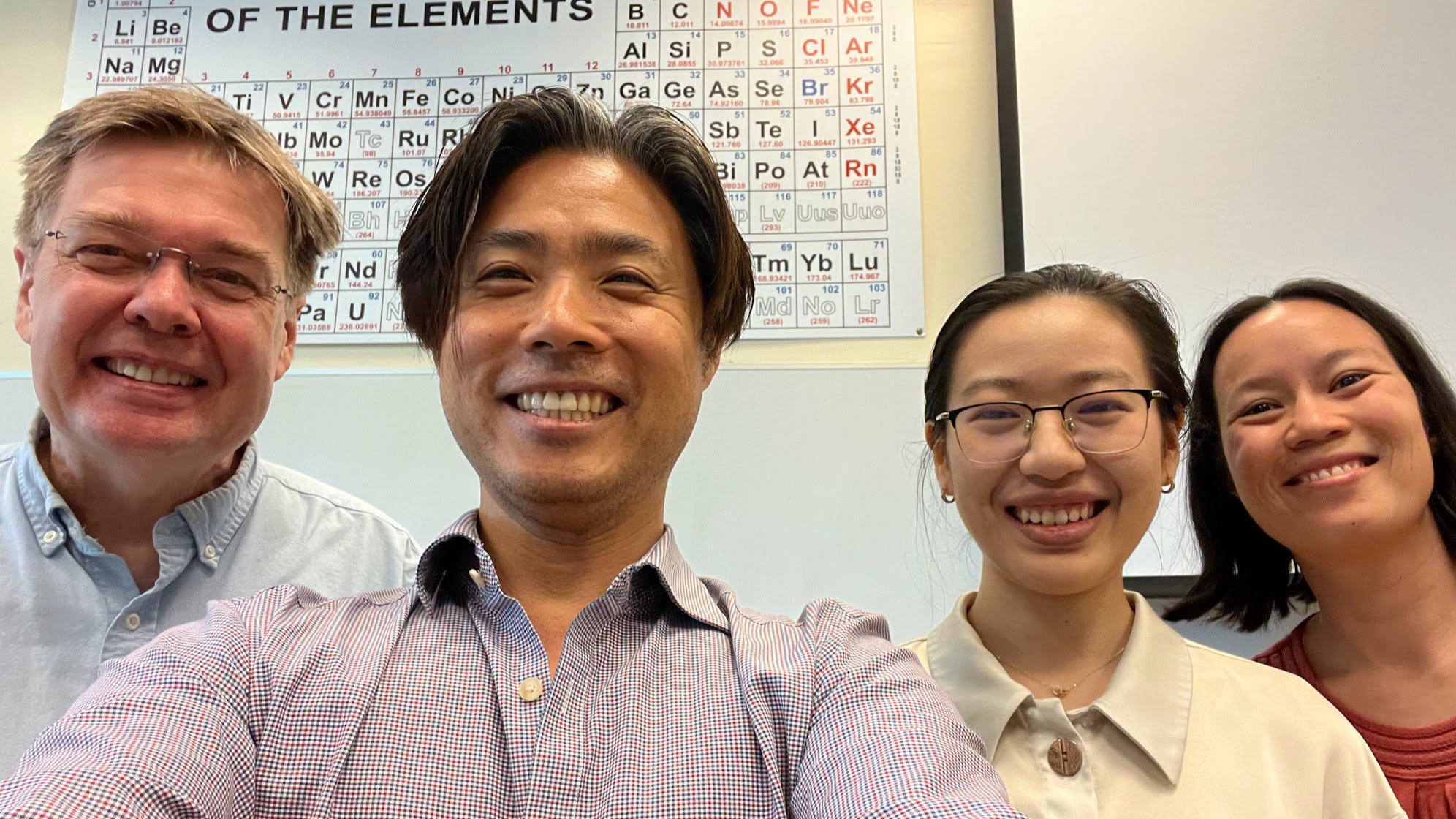
Phillip Wolff, Jinho D. Choi, Natalie Hu, Joyce Ho